Banda Sea Liveaboard
Exploring the Banda Sea's Underwater Spectacle
About
About Banda Sea Liveaboard
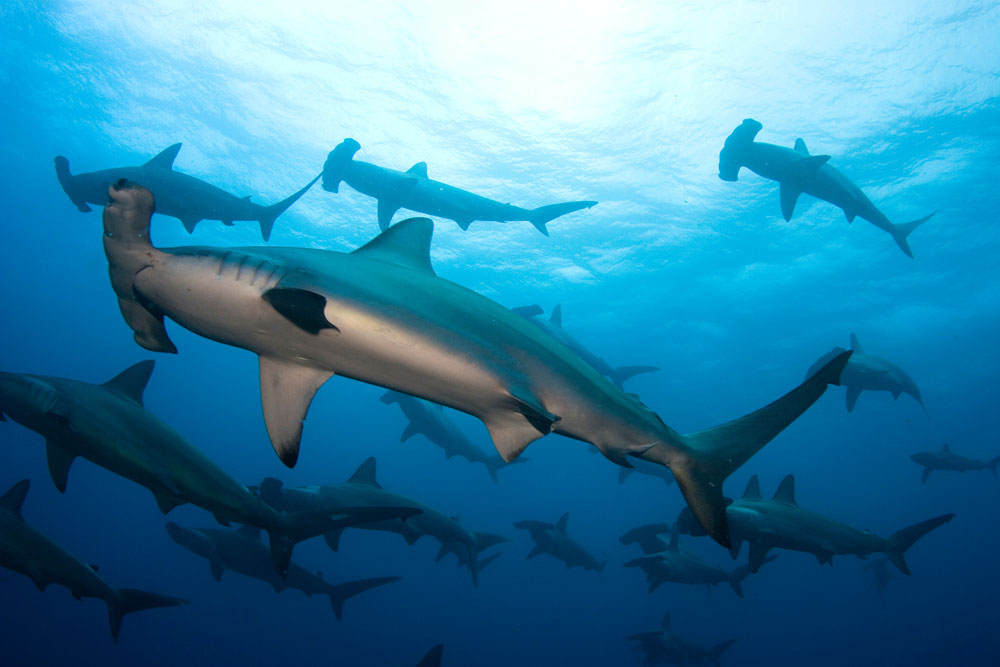
Banda Sea is famous for stunning coral reefs plenty of pelagic species to keep big animal lovers happy. But by far the highlight for Liveaboard Banda Sea is the Hammerhead Shark migration.
Enjoy our liveaboard Banda Sea with free unlimited satellite internet and the best mixture of Enriched Air (NITROX) with the latest technology of Bauer PE 320B Membrane system compressor.
Our Trip Snapshot
Experience
The Banda Sea Experience
Diving in the Banda Sea is an adventure tailored for the experienced diver, with conditions that are as thrilling as they are demanding. The region is renowned for its deep dives into cooler waters, where the currents are as strong as they are unpredictable. These challenging conditions are precisely what draw the majestic hammerhead sharks to school in these waters, offering an unparalleled spectacle for those skilled enough to navigate the depths.
Seasonal Highlights
Banda Sea season is short and typically runs starting September towards November. This makes October to be one of the best months to dive in Banda Sea for the Hammerhead shark migration. The dive plans are concentrated at hammerhead dives in dive sites such as Suanggi, Serua or Hatta. Diverse marine life is expected as well with occasional whale spotting.
What to Expect
Banda Sea is an off the beaten tracks dive destination. Extended travel is expected to reach the embarkation port city of Ambon which makes travel insurance recommended to have. Internet connection can be limited during this particular itinerary. Daily dive plan consists of 3 to 4 dives depending on overall weather and water conditions.
Our Itinerary
Our Banda Sea liveaboard cruises through the Ring of Fire to the Forgotten Islands, offering top-notch diving in Indonesia. We explore numerous islands and diverse dive sites, often pairing Banda Sea with destinations like Raja Ampat, Triton Bay, and Ambon. A major draw is the hammerhead shark migration.
Dive Sites
Top Dive Sites in the Banda Sea
Remote volcanic islands, deep walls, and open ocean encounters — the Banda Sea delivers some of the most exhilarating diving in Indonesia.
Hatta Island Wall
AdvancedVertical wall plunging into the abyss with a hammerhead shark cleaning station, massive schools of barracuda, and pristine hard coral formations.
Suanggi Island
AdvancedOpen ocean site famous for large hammerhead aggregations, oceanic whitetip sharks, and thrilling blue water encounters with big pelagics.
Gunung Api Lava Flow
All LevelsUnderwater volcano with unique lava formations colonized by banded sea snakes, vibrant coral gardens, and an otherworldly volcanic landscape.
Nusa Laut Corner
AdvancedCurrent-swept point where schooling hammerheads patrol the blue, eagle rays glide past, and massive schools of giant trevally hunt in formation.
Banda Neira Harbor
All LevelsHistoric harbor with pristine coral gardens, WWII relics, and fascinating colonial history — explore nutmeg forts above water between dives.
Run Island Drop-off
IntermediateDramatic wall dive with pristine hard coral terraces, Napoleon wrasse, and occasional whale sightings in the deep blue channel.
Best Time to Visit
Banda Sea Diving Season Calendar
The Banda Sea diving season runs from September to December, with the legendary hammerhead migration peaking in October and November.
| Month | Water Temp | Visibility | Currents | Highlight |
|---|---|---|---|---|
| Jan | 28°C | 15–20m | Moderate | Transition season |
| Feb | 28°C | 15–20m | Moderate | Transition season |
| Mar | 29°C | 15–25m | Mild | Calm seas |
| Apr | 29°C | 15–25m | Mild | Off-season |
| May | 28°C | 15–20m | Mild | Off-season |
| Jun | 27°C | 15–20m | Mild | Off-season |
| Jul | 27°C | 20–25m | Moderate | Season opens |
| Aug | 27°C | 20–30m | Moderate | Good conditions |
| Sep | 27°C | 25–35m | Moderate | Hammerheads arrive |
| Oct | 27°C | 30–40m | Moderate | Peak season |
| Nov | 28°C | 30–40m | Strong | Peak hammerheads |
| Dec | 28°C | 25–35m | Strong | Season ends |
Recommended months for diving the Banda Sea
Conditions
Water Conditions & Gear
Temperature
26–29°C (79–84°F)
Visibility
25–40m (80–130ft)
Currents
Moderate to strong — current hooks essential
Best Visibility
October – December
Thermoclines
Rare; consistent warm temperatures
Suit
3mm full wetsuit
Certification
Advanced Open Water + 50 logged dives
Nitrox
Highly recommended for deep wall dives
Marine Life
What You’ll See in the Banda Sea
The Banda Sea is one of Indonesia’s last true frontiers — deep oceanic waters where hammerhead migrations, whale pods, and sea snake colonies create unforgettable encounters.
Sharks & Rays
- Scalloped hammerhead sharks
- Oceanic whitetip sharks
- Grey reef sharks
- White-tip reef sharks
- Eagle rays
Marine Mammals
- Pilot whales (large pods)
- Spinner dolphins
- Sperm whales (seasonal)
- Melon-headed whales
Pelagics
- Giant trevally
- Dogtooth tuna
- Wahoo
- Barracuda schools
- Mola mola (seasonal)
Unique Species
- Banded sea snakes (massive colonies)
- Mandarin fish
- Napoleon wrasse
- Bumphead parrotfish
Reef Life
- Pristine hard coral walls
- Gorgonian sea fans
- Barrel sponges
- Clownfish
- Anthias clouds
Travel
How to Get There
Most Banda Sea liveaboard trips depart from Ambon, the capital of Maluku province. Ambon's Pattimura Airport (AMQ) is served by daily flights from Jakarta, Makassar, and Bali via Garuda Indonesia and Lion Air.
Our team provides full travel assistance to help you arrange domestic flights and ensure seamless connections. Airport-to-boat transfers in Ambon are included in the trip price.
Departure Port: Ambon Pattimura Airport (AMQ) — daily flights from Jakarta and Bali
Travel Tips
Tips for Travelers
Seasonal Planning
The best time to visit the Banda Sea is during the dry season, from September to November, when the hammerhead shark migration peaks and the sea is calmer.
Travel Insurance
Extended travel is required to reach Ambon. We strongly recommend purchasing travel insurance to cover potential flight delays and cancellations.
Dive Preparation
Advanced Open Water certification with at least 50 logged dives is recommended. Many sites feature deep walls, strong currents, and open-ocean blue water dives.
Eco-conscious Travel
The Banda Sea is part of a fragile marine ecosystem. Be a responsible traveler by minimizing plastic use, not touching marine life while diving, and supporting eco-friendly practices.
Travel Essentials
Practical Travel Information
Visa
Visa on Arrival available for most nationalities (30 days, extendable once). Passport must be valid for 6+ months.
Currency
Indonesian Rupiah (IDR). ATMs are extremely limited in the Banda Islands — withdraw all cash in Ambon or Bali before departure.
Language
Bahasa Indonesia is the national language. English is spoken by dive guides and crew on Neptune vessels.
Tipping
Customary to tip the crew. A guideline of $15–20 USD per guest per day is appreciated.
What to Pack
Current hook (essential), reef-safe sunscreen, motion sickness medication, warm layer for night crossings, and underwater camera.
Health
No mandatory vaccinations. Recommended: Hepatitis A/B, Typhoid. DAN dive insurance strongly recommended — nearest chamber is in Ambon.
Electricity
220V, 50Hz with Type C/F plugs (European style). Bring a universal adapter.
Time Zone
WIT (Eastern Indonesian Time), UTC+9.
Our Itinerary
Explore the Banda Sea
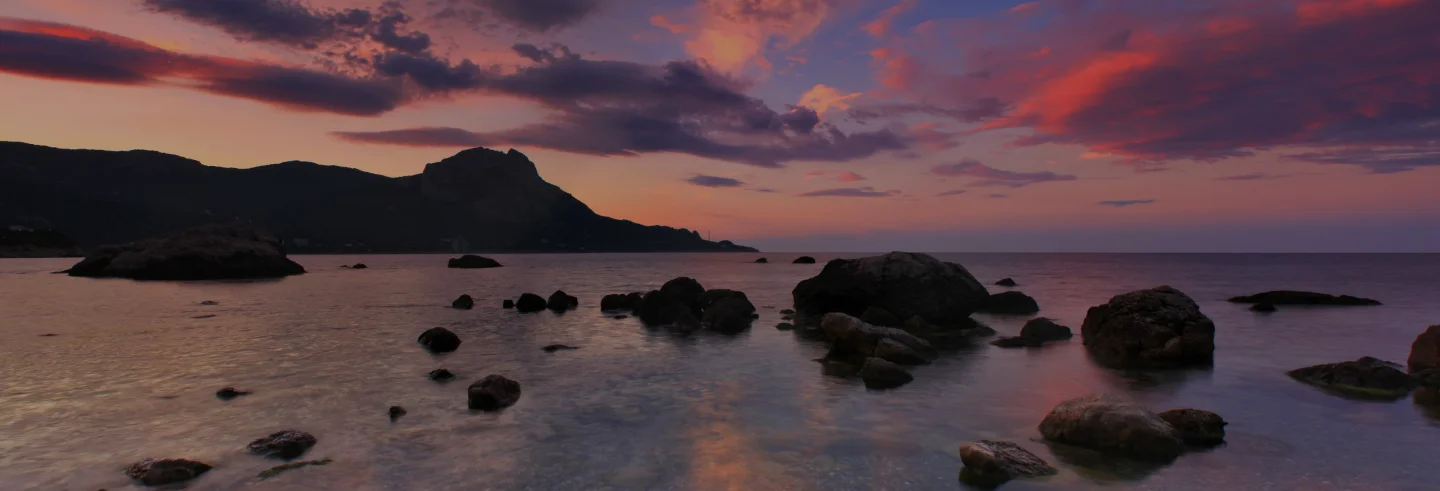
Our Banda Sea liveaboard cruises through the Ring of Fire to the Forgotten Islands, often pairing Banda Sea with destinations like Raja Ampat, Triton Bay, and Ambon. It's ideal for divers ready for both wide-angle and macro photography.
See ScheduleYour Trip
What's Included & Excluded
What's Included
- Liveaboard accommodation
- Airport/Hotel Transfer
- Diving activities
- Three daily main meals
- Unlimited Satellite Internet
- Three main daily snacks
- All-day snacks, coffee / tea
- Tanks, weights, weight belts
- Snorkeling gear
- 4 on 1 diver to guide ratio
- SUP (Stand-up Paddle board)
- Kayaking
Not Included
- NITROX
- 15L tanks
- Single occupancy cabin
- Park & Port fees
- Private dive guide
- Alcoholic beverages & soft drinks
- Equipment rental (BCD, Wetsuit, Regulator, etc)
FAQ
Common Questions
When is the best time to dive the Banda Sea?
The prime season is October to mid-December, when the hammerhead shark migration peaks and visibility reaches 30–40 meters. Calm seas and warm water temperatures of 26–29°C make for ideal diving conditions.
How do I get to the Banda Sea departure port?
Most trips depart from Ambon (Pattimura Airport, AMQ). We can arrange domestic flights from Jakarta or Bali. Our team provides full travel assistance to ensure seamless connections.
What marine life can I expect?
The Banda Sea is legendary for schooling hammerhead sharks, oceanic whitetip sharks, large pods of pilot whales and dolphins, eagle rays, giant trevally, and pristine coral walls teeming with reef fish.
What dive experience level is recommended?
Advanced Open Water certification with at least 50 logged dives is recommended. Many sites feature deep walls, strong currents, and open-ocean blue water dives.
Is there a recompression chamber nearby?
The nearest recompression chamber is in Ambon. All our vessels carry emergency oxygen and DAN dive insurance is strongly recommended. Our crew are trained in dive emergency protocols.
Explore More
See Other Destinations
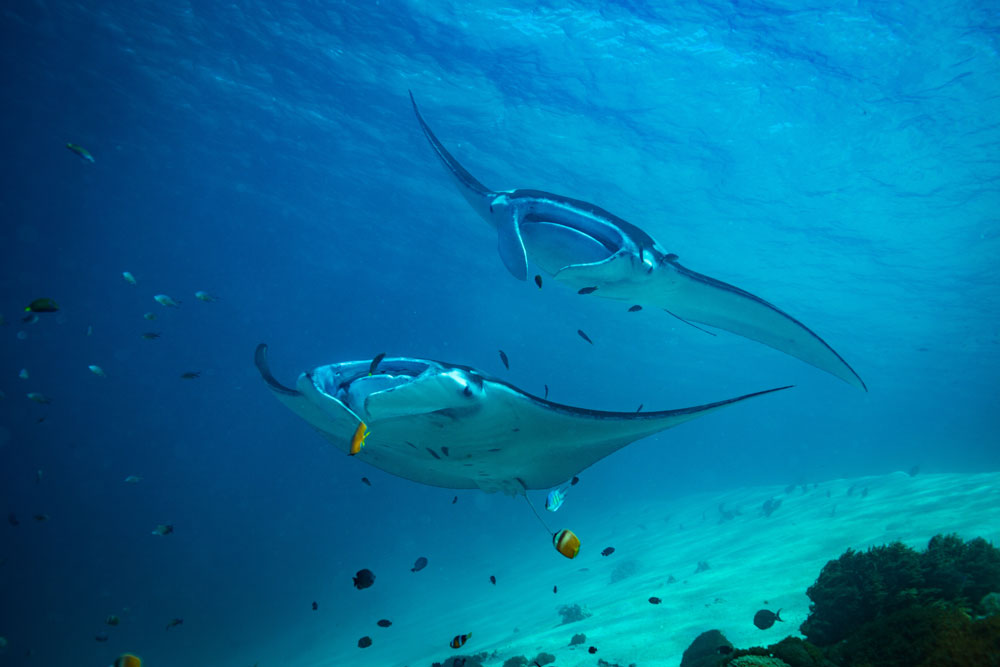
Komodo
A UNESCO World Heritage Site, Komodo National Park is home to the iconic Komodo dragons and offers equally impressive underwater wonders.
Explore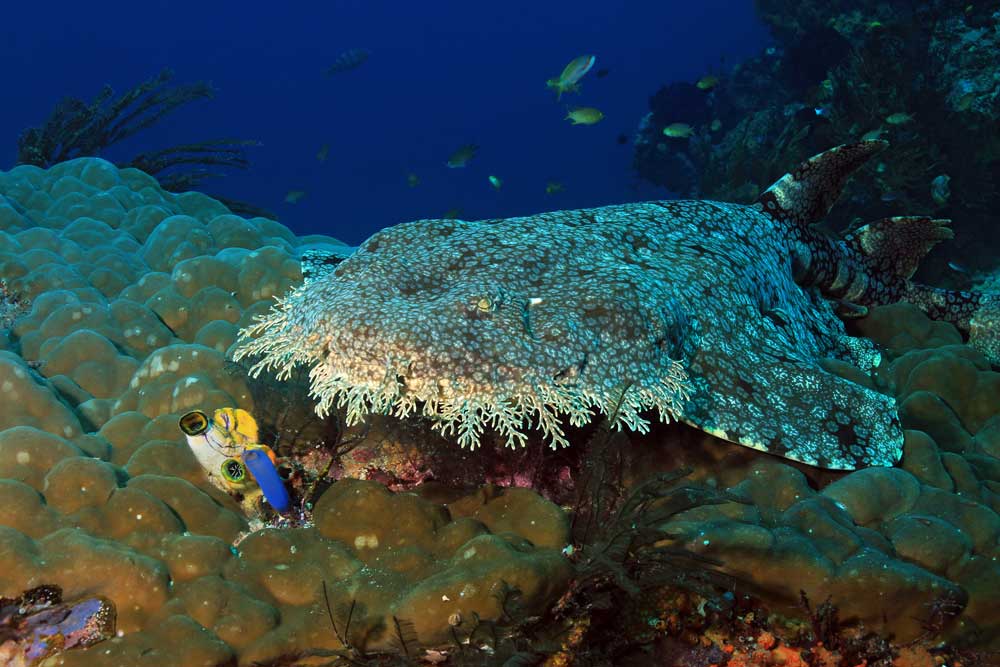
Raja Ampat
Raja Ampat is renowned for its incredible biodiversity, with over 75% of the world's coral species and more than 1,500 fish species found in its waters.
Explore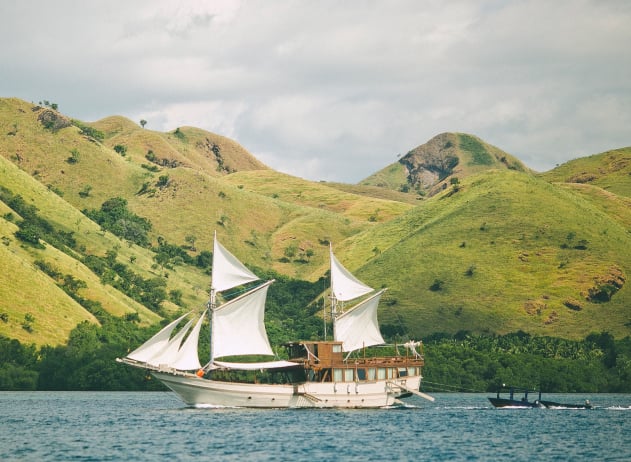
Alor
Indonesia's hidden macro diving paradise with pristine reefs, volcanic underwater landscapes, and incredible critter diversity.
Explore